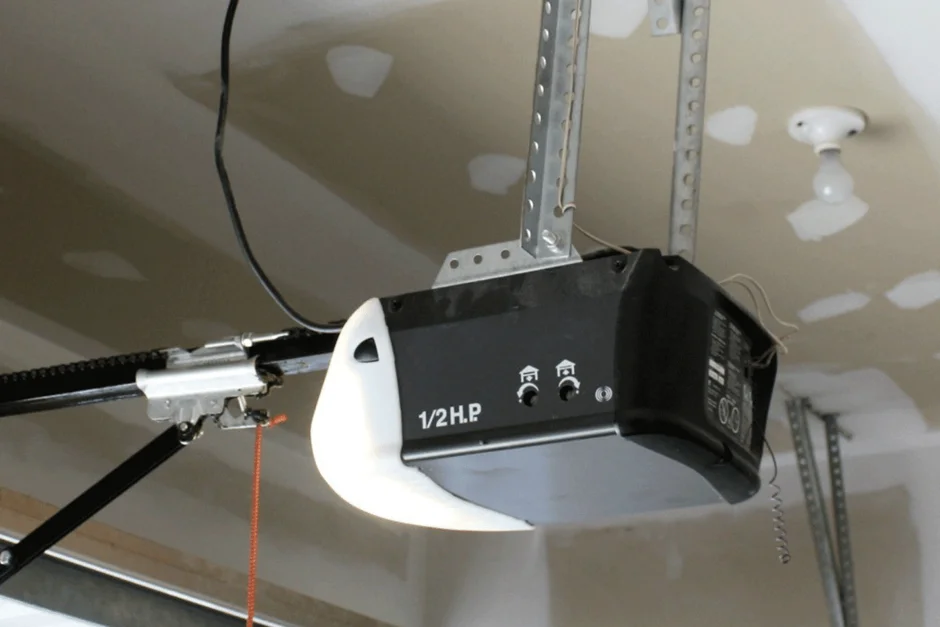
Most opener failures announce themselves. The door reverses at the floor, the motor hums without moving anything, the remote range shrinks to the driveway, or the opener light flashes a pattern when the door will not close. Each symptom points at a different part: photo-eye sensors, the drive gear, the logic board, the travel and force settings, or a door problem the opener is reacting to.
That last point matters. An opener is built to stop or reverse when the door is too heavy, unbalanced, or obstructed. Sometimes the opener is reporting a spring or track fault by refusing to work, and repairing the opener alone would fix nothing.
What are the clearest signs an opener needs repair?
The clearest signs are a door that reverses for no visible reason, a motor that hums or clicks without moving the door, a remote or keypad that works only sometimes, a door that stops partway, and a chain or belt that sags or jumps. Any one of these is worth a call. Two together usually mean the opener is close to quitting entirely.
- Door reverses at the floor or mid travel: often photo-eye sensors out of alignment, or force settings reacting to a stiff door.
- Motor hums, door does not move: a stripped drive gear is a classic cause, especially on older chain drive units.
- Remote range shrinking: a failing logic board, interference, or an antenna problem. Fresh batteries rule out the simple cause first.
- Door starts, stops, and the light flashes: the opener is reporting a fault. Count the flashes and note them for the call.
- Grinding from the opener rail: worn gear or a dry, stretched chain or belt asking for attention.
- Opener runs but the door stays put: the trolley may be disconnected, or the emergency release was pulled and never re-engaged.
Brand helps with diagnosis, so note whether your unit is a LiftMaster, Chamberlain, or Genie when you call. The opener repair page covers how these systems get tested and quoted.
Why do photo-eye sensors cause so many opener calls?
Photo-eye sensors sit near the floor on each side of the opening and shoot a beam across it. If the beam is blocked, misaligned, or the lenses are dirty, the opener will not close the door, by design. These sensors are required safety devices, and the flashing opener light plus a door that reverses at the same spot is the classic symptom pattern.
Check the simple things first: wipe both lenses, look for a knocked sensor bracket, and check that both sensor lights are lit and steady. In College Grove garages, stored tools, leaf blowers, and bikes leaning by the door cause a fair share of these calls. If the lights will not stay steady, the fault is wiring or the sensors themselves, and that is sensor repair work, not a setting to defeat. Never tape or bypass the sensors to get the door to close.
Chain drive or belt drive: does the type change the signs?
Yes, mainly in the sounds and the wear pattern. A chain drive is louder by nature and can develop a slap or rattle as the chain stretches. A belt drive runs quieter, so a new whine or squeal from a belt unit stands out sooner. Both can suffer the same gear, board, and sensor faults, so the type changes the noise, not the logic of the diagnosis.
LiftMaster and Chamberlain both publish model support and manuals that list light flash codes by model. If your opener flashes a pattern, that code plus the brand is the fastest information you can hand a technician on the phone.
Which opener checks can you do yourself?
You can safely change remote batteries, check that the opener has power at the outlet, wipe and realign photo-eye sensors by hand, and confirm the emergency release is re-engaged. You can also test whether the door itself is balanced, with the opener disconnected, if the door moves freely by hand. Leave the opener case closed: capacitors, gears under load, and board work belong to the repair visit.
- Swap the remote battery and test the wall control. If the wall control works and the remote does not, the fault is in the remote path.
- Look at both photo-eye sensors. Clean lenses, steady lights, nothing leaning into the beam.
- Pull the release cord and lift the door by hand. A balanced door lifts smoothly and stays halfway. A heavy door means a spring problem, not an opener problem.
- Note the brand, the drive type, and any light flash pattern when the opener refuses to run.
If the hand test shows a heavy or crooked door, the next call is about the door, not the opener. In McDaniel Estates, with its wide double doors, a tired spring behind an opener fault is a pattern we see often.
When is it repair, and when is it a new opener?
Repair makes sense when the fault is a sensor pair, a gear, a remote or keypad, or a board on an otherwise sound unit with parts still available. Replacement enters the picture when the opener is old enough that parts are scarce, when the drive and board fail together, or when you want current safety and access features your unit predates. A straight answer weighs the repair quote against the age of the unit, out loud, before you decide.
If the door also needs work, sequence matters: door balance first, opener second. Homes off Horton Highway and around The Grove often pair an opener visit with a spring or roller check for exactly that reason. More opener and noise guides are on the College Grove blog hub.
Frequently Asked Questions
What are the signs my garage door opener needs repair in College Grove? Look for a door that reverses for no visible reason, a motor that hums without moving the door, remotes that work only sometimes, a door that stops partway, or grinding from the rail. One sign is worth checking. Two together usually mean the opener is close to failing, so call (615) 314-2181 and describe the symptoms.
Why does my garage door opener hum but not move the door? A humming opener that does not move the door often has a stripped drive gear, a disconnected trolley, or a door that has become too heavy for it to lift, which can point back to a broken spring. Stop running it, because repeated attempts can damage the motor, and have both the opener and the door checked.
What should I do if my garage door opener is malfunctioning in College Grove? Run the simple checks first: fresh remote batteries, power at the outlet, clean and aligned photo-eye sensors, and the release cord re-engaged. Note the brand and any light flash pattern. If the fault stays, call College Grove Garage Door Rescue at (615) 314-2181 rather than opening the opener case yourself.
Can I repair my garage door opener myself? You can handle batteries, sensor cleaning and alignment, and basic power checks. Gear, belt or chain, logic board, and capacitor work should be left to a technician, because the unit holds electrical charge and drives a heavy door. Defeating the safety sensors to keep an opener running is never a safe repair.
How much does garage door opener repair cost in College Grove? Most repairs on this site are listed at $129 to $399, and an opener job is quoted inside that kind of range once the fault is confirmed. A sensor pair costs less than a drive or board repair. You get the exact price before any work starts, whichever part turns out to be the problem.