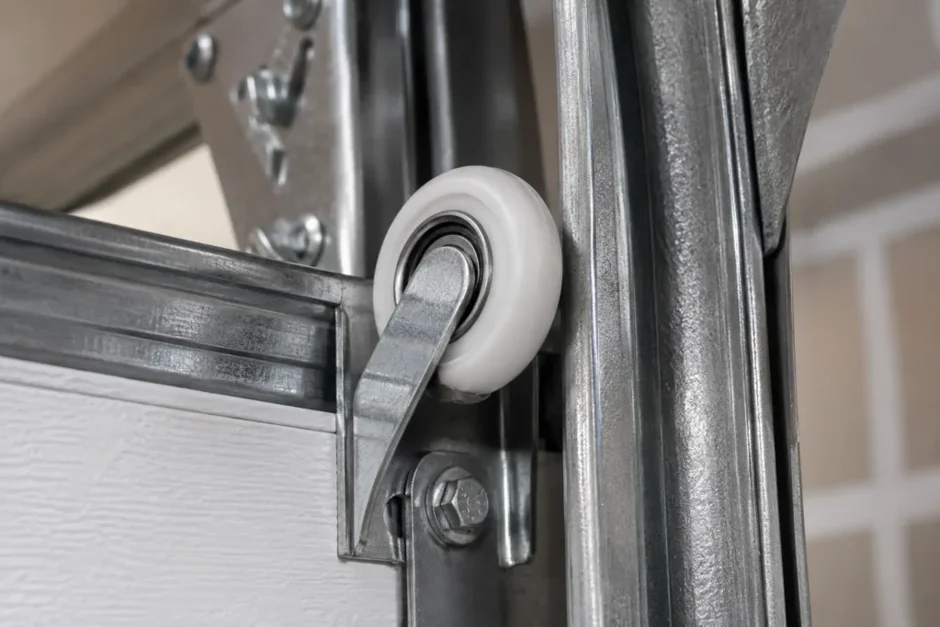
A garage door that suddenly gets loud is usually telling you a moving part is worn, loose, or running dry. Steel rollers with worn bearings, loose hinge bolts, and a dry chain drive are the causes we find most often in College Grove, and each one makes a different kind of noise.
Start by listening, not by taking things apart. Note when the sound happens, at opening, closing, or one spot in the travel, and whether the door still moves evenly. That detail helps a technician narrow the cause fast, whether the fix is replacing worn rollers or something deeper in the drive system.
What does each garage door sound usually mean?
Different sounds point to different parts, and matching the sound to the part saves guesswork. Grinding often means worn roller bearings or a worn opener gear. Squeaking usually means dry hinges or rollers. Rattling points to loose hardware. A loud bang followed by a door that will not lift often means a broken spring.
- Grinding or growling: worn steel rollers, a worn drive gear, or a track problem putting the door under strain.
- Squeaking or chirping: dry hinges, dry roller stems, or a dry chain on a chain drive opener.
- Rattling or banging: loose nuts and bolts on hinges, track brackets, or the opener rail, shaking with every cycle.
- Popping or snapping at one spot: a roller jumping a damaged track section or a panel hinge binding as the door turns the corner.
- One loud bang, then a dead door: a torsion or extension spring has likely snapped. Stop there and read the safety notes below.
If the noise comes with a door that sits crooked in the opening, the problem is often mechanical alignment rather than lubrication. That is the point where track repair and realignment matters more than another round of spray lubricant.
Which checks are safe to do yourself?
A few checks are safe for a homeowner because they do not involve springs, cables, or anything under tension. You can look, listen, tighten surface hardware with the door closed, and lubricate the right parts with a garage door lubricant. Stop at anything connected to the springs or lift cables, because those parts carry the weight of the door.
- Watch one full cycle from inside the garage, standing clear of the door, and note where the noise is loudest.
- Check for loose hardware on hinges and track brackets with a socket wrench. Snug is enough. Do not remove bolts.
- Lubricate moving parts: roller stems, hinges, and the torsion spring surface if your door has one, using a silicone or lithium garage door lubricant. Keep lubricant out of the tracks themselves.
- Test the balance only if the door moves freely: pull the red release cord, lift the door halfway by hand, and see if it stays. If it slams or shoots up, the springs need a professional, not more testing.
- Run the door again and compare. If the sound is unchanged, the cause is a worn part, not dryness.
Manufacturer maintenance guidance is worth a look before you buy parts. LiftMaster publishes homeowner maintenance steps that cover lubrication points and balance testing for common opener and door setups.
Why do doors get louder in College Grove weather?
Middle Tennessee humidity is hard on bare steel. Summer moisture in Williamson County can rust roller bearings, hinge points, and extension springs, and rusty parts grind instead of rolling. January cold snaps do the opposite kind of damage: cold steel gets brittle, old springs fail more often in winter, and a door can go from quiet to broken in one cycle.
Homes on acreage off Eudailey Covington Road and Arno Road also sit open to storm winds that can rack a door in its tracks. In Falls Grove and Reeds Vale, where many doors were installed during the same building years, rollers from the same era tend to wear out on a similar schedule, so one loud door on the street often means neighbours are close behind.
What mistakes make a noisy door worse?
The most common mistake is spraying lubricant everywhere and calling it fixed. Lubricant cannot repair a cracked roller or a frayed cable, and grease packed into the tracks collects grit that speeds up wear. The second mistake is forcing a door that has changed sound suddenly, because a broken spring leaves the opener lifting the full weight of the door on its own.
- Ignoring a new sound: noise is often the first and cheapest warning a part gives before it fails.
- Using thick grease in the tracks: tracks should stay clean. Rollers need the lubricant, not the track channel.
- Disconnecting safety parts: never tape down photo-eye sensors or bypass the auto reverse to keep a loud door running.
- Treating every noise as an opener problem: many loud doors have a healthy opener and worn door hardware, which is why a proper opener inspection starts with the door itself.
When is a loud door a safety problem?
Noise becomes a safety problem when it comes with changed movement. A door that jerks, drops faster than it used to, sits crooked, or leaves a visible gap under one side can have a broken spring or a frayed lift cable. Those parts hold a heavy door under tension, and a failure can drop the door without warning.
If you see a gap in the spring coil above the door, a cable hanging loose, or a door that the opener strains to lift, stop using it and keep people and cars clear. Our emergency garage door service covers doors that are unsafe or stuck, and you can read more local guides on the College Grove blog hub any time.
Frequently Asked Questions
Why is my garage door making a loud noise in College Grove? A loud door usually means a part is worn, loose, or dry. Worn steel rollers, loose hinge bolts, and a dry chain drive are the most common causes, and Williamson County humidity can add rust that makes the noise worse over time.
Can I keep using a garage door that suddenly got loud? You can usually run it briefly to check where the sound comes from, but do not keep cycling it. A sudden bang followed by a heavy or crooked door often means a broken spring or frayed cable, and forcing the door can damage the opener or drop the door.
Will lubricating the door fix the noise? Lubrication fixes squeaks from dry hinges and roller stems, and that is all it fixes. Grinding, rattling, or popping usually means a worn roller, loose hardware, or track damage, and those parts need repair or replacement rather than more lubricant.
How much does it cost to quiet a noisy garage door in College Grove? Most repairs on this site are listed at $129 to $399, and the final quote depends on which part failed. A roller set costs less than a drive or spring job. You get the price before any work starts, so call (615) 314-2181 and describe the sound.
When should I call a professional about garage door noise in 37046? Call when the noise survives basic lubrication and hardware checks, when the door moves unevenly, or when you see a broken spring or loose cable. Homes in ZIP code 37046 can reach College Grove Garage Door Rescue at (615) 314-2181 during regular hours, with emergency help after hours.