What is the actual difference between a belt and a chain drive?
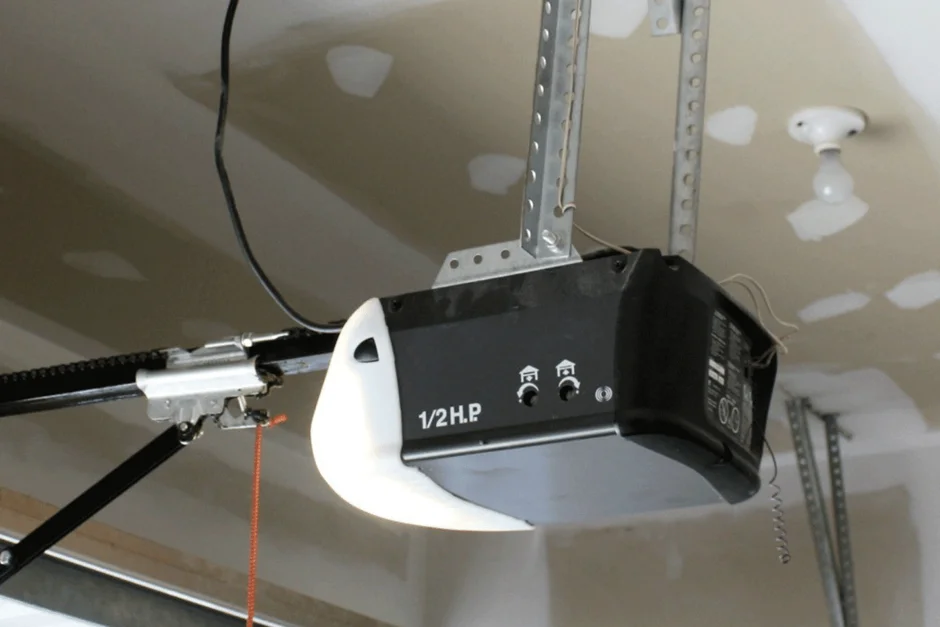
Both openers use the same basic layout: a motor in a ceiling-mounted unit, a long rail to the door, and a trolley that pulls the door up and pushes it down. The difference is what runs inside that rail. A chain drive pulls the trolley with a metal chain, much like a bicycle chain. A belt drive uses a reinforced rubber belt with internal cords instead, which runs smoother and flexes instead of clanking.
Everything else about the two systems is shared. Both work with the same safety sensors, the same remotes and keypads, and the same spring system doing the actual heavy lifting. That last point matters more than the drive choice: a balanced door on healthy springs is easy work for either drive, and a heavy, unbalanced door will wear out either one early. LiftMaster and Chamberlain both sell full ranges of each type if you want to read the manufacturer descriptions side by side.
Which is quieter, and when does the noise actually matter?
The belt drive is quieter, and it is not close. A chain makes metal-on-metal contact along the rail and telegraphs vibration into the ceiling joists, so the whole house hears and slightly feels the door run. A belt removes most of that contact noise, and many belt units pair the belt with a soft-start motor that ramps up and slows down instead of jolting the door.
Whether that matters depends on your floor plan. Many homes in Falls Grove and Reeds Vale put a bedroom or bonus room directly over the garage. In those houses, a 6AM departure under a sleeping teenager is a real quality-of-life issue, and the belt earns its keep every single day. In a detached garage or a house where no one sleeps near the door, chain noise is a shrug. Match the drive to the rooms around the garage, not to a showroom demo.
Which drive handles a heavy door better?
Properly sized, both do. The opener does not lift the door's full weight; the springs do, and the opener guides a balanced load. Where heavy doors change the conversation is motor sizing and rail strength. The tall, wide carriage style and wood overlay doors common in The Grove and Troubadour deserve a stronger motor and a one-piece rail, in whichever drive you choose, plus springs that are genuinely matched to the door.
Chain drives have the longer track record under heavy, high-cycle use, and the chain itself is easy to inspect: you can see stretch and wear. Belts ask you to trust the cord inside the rubber, though in practice a belt in residential use typically outlasts the motor around it. If a door feels heavy by hand with the opener disconnected, neither drive is the fix. The springs are. Get the balance right first, then choose the drive for noise and upkeep.
What does each drive need in maintenance?
A chain needs occasional attention: a light application of garage door lubricant on the chain, and a tension check, because a chain stretches slowly over the years and a slack chain slaps the rail and wears the sprocket. A belt needs no lubrication at all, and oiling one is a mistake, but it should be eyeballed during any service visit for cracks, fraying at the edges, or glazing on the surface.
Both drives share the rest of the upkeep list, and it is the same list for every College Grove home: test the safety reverse monthly, keep the photo-eye lenses clean, lubricate the door's rollers and hinges, and listen for change. Tennessee humidity corrodes chain links and hardware faster than it touches a belt, which is a small but real point in the belt's favor for garages that stay damp. Our opener repair page lists what we check when either type starts misbehaving.
Is a wall-mount opener worth considering instead?
For the right garage, yes. A wall-mount unit, often called a jackshaft opener, mounts beside the door on the torsion bar and turns the bar directly. There is no rail and nothing hanging from the ceiling. That frees the ceiling for storage racks or a vehicle lift, and it suits the tall ceilings in many custom College Grove garages where a ceiling unit would hang awkwardly low or need a long drop mount.
Wall-mount units are belt-quiet by nature, since there is no chain or rail to rattle, and most include battery backup and app control as standard. The trade-offs are a higher unit price and a door that must have a torsion spring setup with room on the wall beside it. If your garage has the ceiling height problem or the storage problem, ask about it when we talk through a new opener installation, because it is the option most homeowners never hear about.
How do you choose for your house?
Skip the idea of an overall winner and match the drive to the house, using this short list.
- Bedroom or living space over or beside the garage: belt drive, ideally with a soft-start motor.
- Detached garage, workshop, or barn style building where noise travels nowhere: chain drive does the job and asks little.
- Heavy carriage, wood overlay, or oversized door: either drive in a stronger motor size, on a one-piece rail, with springs verified first. Wall-mount belongs on the shortlist too.
- Tall ceiling, storage racks planned, or a lift on the wish list: wall-mount, and keep the ceiling empty.
- Garage used as the main entrance, many cycles a day: belt for the quiet, and whichever drive you choose, plan on the spring and roller upkeep that high cycle counts demand.
On cost, we will not invent numbers here. What moves an installation quote is the motor size, the drive type, whether battery backup is included, the door's height and condition, and whether the existing wiring and outlets suit the new unit. Battery backup deserves a mention of its own: after a storm knocks out power on a College Grove evening, a backup battery is the difference between parking inside and leaving the car in the driveway. If your current opener is failing, our guide to the signs an opener needs repair helps you decide whether you are choosing a drive at all, or just fixing the one you have.
Frequently Asked Questions
Is a belt drive opener quieter than a chain drive? Yes, typically by a lot. A chain runs metal on metal along the rail and carries vibration into the ceiling, while a reinforced belt runs smoothly with far less contact noise. The difference matters most when a bedroom or bonus room sits over the garage, as it does in many Falls Grove and Reeds Vale homes.
Can I switch from a chain drive to a belt drive opener? Yes. The opener is replaced as a complete unit, motor, rail, and drive together, and the new unit connects to your existing door, sensors, and wiring in most cases. It is a straightforward installation job. Your remotes and keypad are then programmed to the new unit, and the old codes go away with the old opener.
Which opener is better for a heavy wood or carriage style door? Either drive works if the motor is sized for the door and the springs are balanced for its true weight. Heavy doors in The Grove and Troubadour usually call for a stronger motor and a one-piece rail, or a wall-mount unit. What shortens opener life is not the drive type. It is a heavy door on tired springs.
Do belt drive openers need maintenance? Very little. The belt itself should never be lubricated. It only needs a visual check for cracks or fraying during routine service. The door around it still needs the usual care: roller and hinge lubrication, sensor tests, and spring balance checks. A chain drive adds chain lubrication and tension checks to that list.
How much does a new garage door opener cost in College Grove? Installation is quoted per home, because motor size, drive type, battery backup, and door condition all move the price, and we would rather measure your door than publish a number that does not fit it. Repairs are simpler: most repair work listed on this site runs $129 to $399. Call (615) 314-2181 for an upfront installation quote.